Creating a dense, biodiverse compost does not seem that complicated. By simply adding organic matter from the kitchen, some leaves, and other plant-based material, after a few months there will be compost ready to be added to the garden. Unfortunately, this is a very novice approach to producing compost which might leave you with either a soggy, wet and moldy pile of garbage or a less than likely dry dusty heap of leaves and branches that doesn’t break down. Looking into what makes a healthy compost, provides a realization that it is much more complicated, than at first glance. So, before diving in, it is important to gain a small amount of background information. Decades and even centuries worth of educational material are available both online and in print to guide the aspiring composter to producing rich bio-matter for the garden.
A few weeks ago after seeing a group of friends craft a home size, portable compost bin, the decision to make one came to be. In the following weeks, the need to step back and realize the importance of understanding the basics kicked in. On face value, one might think that compost could include any sort of organic matter. Or perhaps you were one of us who grew up with a compost pile that simply served as a midden for organic matter saved from the landfill. However, creating beautifully bio-rich compost for the garden requires careful preparation and attention to detail. Research shows that there should be a 2:1 ratio of brown (dry) to green (wet) ingredients. This was the first mistake. Since the inception of the DIY Compost Bin, a tremendous amount of wet ingredients were added and a much smaller quantity of their dry counterparts.
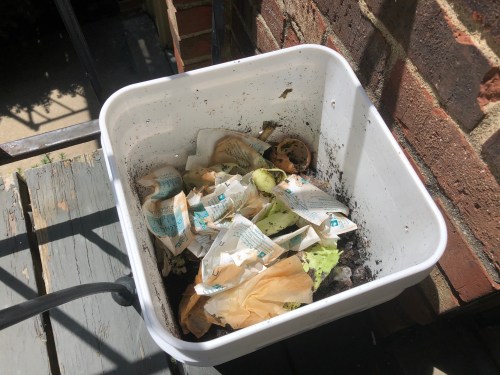
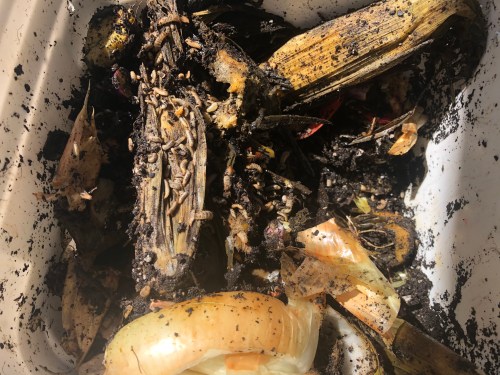
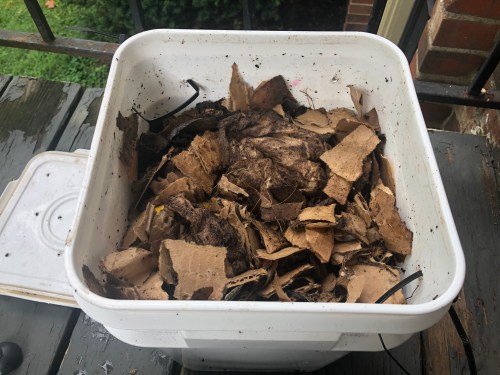
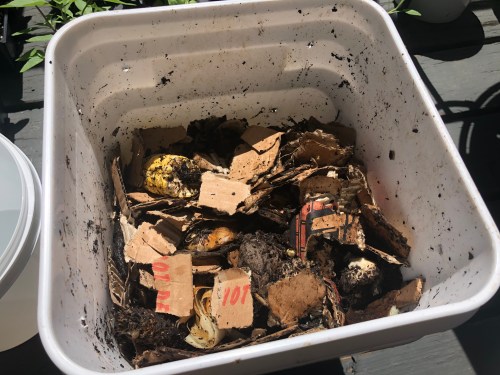
But how did we come to this conclusion? An important step to compost is turning it or in this case mixing it around. Doing this in a small bin, I wore a glove and stuck my hand down into it. A large number of light brown maggots were living in the compost and this sent me to do some research. These were not just any maggots, but larvae which come from the Black Soldier Fly. Many explanations concluded that maggots can be important to creating usable compost. They assist in the decomposition of the organic matter and help its development, when found in appropriate ratios. Although, due to the alarming rate of maggots in the bin, because of the warm, moist environments and plethora of food, some research suggested to throw the compost out and start over. On the other hand, by adding more brown materials and fine tuning the 2:1 ratio of brown/green materials, the compost could be saved. By reducing the ratio of organic matter, or maggot food, many will die off, stabilizing the compost.
Here is a list of what brown vs. green you might use:
Brown
- dried leaves
- dead branches
- cardboard
- sawdust
Green
- fresh fruit/vegetable scraps
- fresh grass clippings
- green leafy materials
- animal manures (large space only)
Now that we know what to use, here is a list of items that should not be added to compost:
- meat, seafood, or poultry scraps
- dairy products
- citrus peels or onions (in large quantities)
- oil or oil stained cardboard
- glossy, coated, or sticky materials
- treating wood or chemically sprayed plants
- large branches or large hardy plants
- anything containing toxic chemicals
There are many different reasons for not including each of these items into what could one day be an organic, biodiverse compost. The first is that hopefully this compost will be added to a garden containing foods that will be consumed. But more importantly, all of the complications which will occur along the way. The three general themes all of these items have are attraction of unwanted animals and pests, causing the compost to rot rather than decompose, and adding toxic chemicals which can contaminate the soil, plants, and even our bodies.
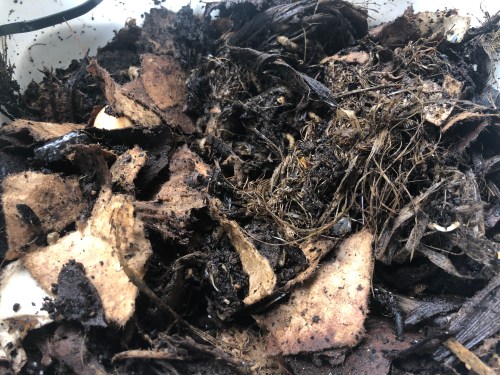
Now that we know how to build our own compost bin and have the basics of composting down, the next step is taking it into action. Remember, there are many insects and some might not be as beneficial, so it is important to monitor your compost and research the benefits and drawbacks of the insect in question. If your ratio is too wet, you might encourage too many insects. Likewise, too much brown and dry materials may not produce anything at all! So keep to it and show us what you are producing. If you have any questions or concerns, please feel free to contact us and we will do our best to lead you in the right direction. Happy Composting!
 Sustainable Consumptions